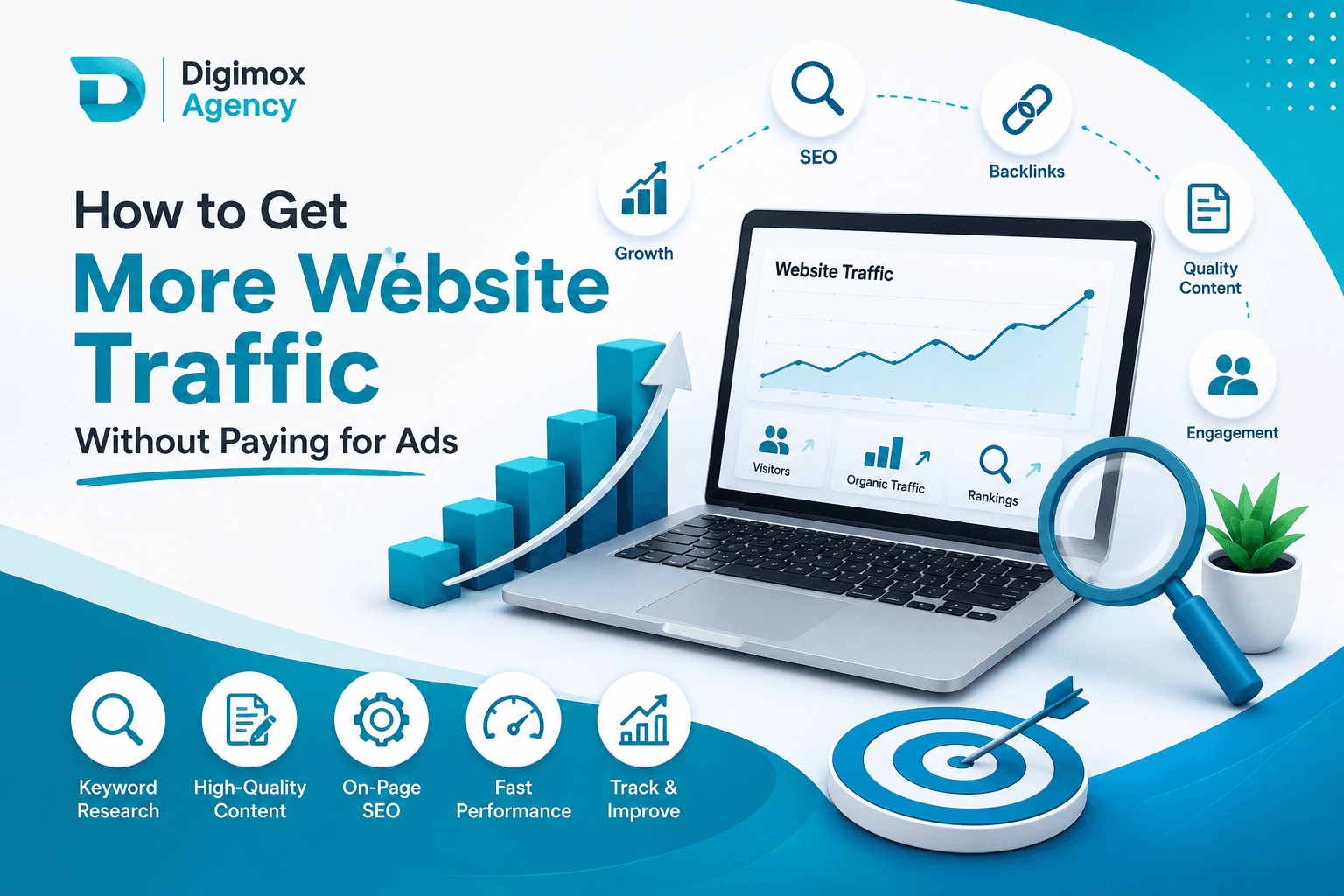
If you are searching for ways to get more website traffic without paying for ads, you are not alone. Every small business owner eventually asks the same question: how do you grow visibility online without draining your budget on paid campaigns? The good news is that it is entirely possible to get more website traffic without paying for ads when you combine smart SEO practices, quality content, and consistent effort. This guide walks you through everything a professional Digital Marketing Agency would teach a client who wants sustainable, long-term growth instead of short-lived, expensive ad spikes.
Whether you run a local bakery, a SaaS startup, or a personal blog, learning how to get more website traffic organically is one of the smartest investments you can make. Unlike paid ads that stop working the moment your budget runs out, organic strategies compound over time. This article is structured as a practical roadmap for anyone who wants to understand how to grow a small business online using free, ethical, and search-engine-approved methods.
Why Organic Traffic Matters More Than Ever
Every business wants more visitors, more leads, and more sales but not every business wants to pay for it forever. That’s exactly why so many owners search for ways to get more website traffic without paying for ads. Organic traffic, unlike paid traffic, keeps working for you long after you’ve done the initial work. A well-optimized blog post can drive organic website traffic for years, while a paid ad campaign stops the second you stop paying.
A reputable Digital Marketing Agency will tell you that organic search is still the single largest source of website traffic for most industries, and any experienced Digital Marketing Agency will build a client’s strategy around that fact first. Google Search alone drives billions of clicks every day, and businesses that rank well capture that demand for free. This is why increase organic traffic has become one of the most searched phrases among entrepreneurs trying to figure out how to grow a small business online without burning cash on advertising.
The appeal is simple: once you understand how to drive traffic to your website using free methods, you build an asset instead of renting one. This is the core philosophy behind every strategy discussed in this guide.
Understanding Search Intent and Keyword Research
Before you can get more website traffic without paying for ads, you need to understand what your audience is actually typing into Google. This is where keyword research and search intent come in.
Search intent refers to the why behind a search query. Are people looking to buy something, learn something, or compare options? A Digital Marketing Agency typically categorizes intent into four types:
- Informational “how to get more website traffic”
- Navigational searching for a specific brand or website
- Commercial investigation comparing products or services
- Transactional ready to buy or sign up
Matching your content to the correct intent is one of the most overlooked website traffic strategies. If someone is searching with informational intent and lands on a sales page, they’ll bounce immediately, hurting your rankings.
How to Do Keyword Research the Right Way
- Start with a seed keyword related to your niche.
- Use free tools like Google Search, Google Trends, and Google Search Console to find related queries.
- Look at the “People Also Ask” and related searches sections.
- Prioritize long-tail keywords with clear intent over broad, high-competition terms.
- Group keywords by topic to build content clusters.
This process is exactly what a Digital Marketing Agency performs before writing a single blog post for a client. Skipping keyword research is one of the fastest ways to waste time creating content nobody searches for. A Digital Marketing Agency also cross-references keyword data with competitor content, ensuring every piece published has a genuine chance of ranking rather than being lost among thousands of similar articles.
On-Page SEO: The Foundation of Organic Website Traffic
On-page SEO is where most of the get more website traffic without paying for ads journey begins. It refers to everything you control directly on your website your content, structure, and metadata.
Meta Title and Meta Description
Your meta title is the first thing users see on Google Search. It should include your primary keyword naturally, stay under 60 characters, and be compelling enough to earn a click. Your meta description, while not a direct ranking factor, heavily influences click-through rate, which indirectly affects Google ranking factors over time.
Header Structure
Using clear H1, H2, and H3 headings helps both users and search engines understand your content hierarchy. Every page should have one H1 that includes your primary keyword, followed by logically structured subheadings.
Content Quality and Depth
Google rewards comprehensive, well-researched content that fully answers a query. Thin content rarely ranks, no matter how many keywords you stuff into it. This is why any experienced Digital Marketing Agency insists on quality over quantity when producing content for clients who want to increase website traffic organically.
URL Structure
Short, descriptive URLs that include your target keyword perform better than long, auto-generated strings full of numbers and symbols.
Technical SEO: The Backbone of Website Optimization
Technical SEO ensures search engines can crawl, index, and understand your website properly. You could have the best content in the world, but if Google can’t index it, you’ll never get more website traffic without paying for ads.
Key technical SEO elements include:
- Site speed Slow-loading pages hurt both rankings and user experience.
- Mobile-friendliness Google uses mobile-first indexing, so your site must work flawlessly on phones.
- Crawlability A clean XML sitemap and robots.txt file help search engines find your pages.
- Indexing Regularly check that your important pages are actually indexed, not blocked accidentally.
- HTTPS security – Secure sites are favored in Google ranking factors.
- Core Web Vitals – Metrics measuring loading speed, interactivity, and visual stability.
A Digital Marketing Agency will typically run a full technical audit before recommending any content strategy, because without a technically sound foundation, even the best website traffic tips won’t matter. Many owners who first approach a Digital Marketing Agency assume content alone will help them get more website traffic without paying for ads, only to discover that fixing technical SEO issues first is what unlocks real results. A skilled Digital Marketing Agency will always prioritize this order of operations.
Content Marketing: The Engine Behind Free Website Traffic
If SEO is the foundation, content is the fuel. Consistently publishing valuable, keyword-optimized content is still the most reliable way to increase website visitors without spending on ads.
Types of Content That Drive Free Website Traffic
- Blog posts answering common customer questions
- How-to guides and tutorials
- Comparison articles (like this one)
- Case studies showing real results
- Original research or data that other sites want to reference
- Video content repurposed into blog transcripts
Content Clusters and Pillar Pages
Rather than writing isolated posts, group related content around a central “pillar” page. For example, a pillar page on online marketing for small businesses could link out to supporting articles on SEO, social media, and email marketing. This structure signals topical authority to Google and is a favorite tactic used by every serious Digital Marketing Agency.
Consistency Beats Intensity
Publishing one high-quality article every week consistently will outperform publishing ten articles in a single month and then going silent. Search engines favor freshness and consistency, both of which build long-term search visibility.
Off-Page SEO and Backlink Building
Off-page SEO refers to actions taken outside your own website that influence your rankings primarily backlinks from other reputable websites.
Why Backlinks Matter
External links pointing to your site act as votes of confidence in Google’s eyes. The more relevant, high-quality backlinks you earn, the more authority your domain builds, which directly helps you boost website traffic over time.
Ethical Ways to Build Backlinks
- Guest posting on reputable, relevant blogs
- Getting listed in industry directories
- Building relationships with journalists via digital PR
- Creating link-worthy resources like original studies or free tools
- Reaching out to sites that mention your brand without linking
A Digital Marketing Agency typically combines outreach, content creation, and relationship building to earn backlinks naturally rather than buying them, since purchased links violate Google’s guidelines and can result in penalties.
Local SEO for Small Businesses
If you run a physical or service-based business, local SEO is one of the fastest ways to get more website traffic without paying for ads. Local searches often carry strong buying intent, meaning users are actively looking to visit or hire someone nearby.
Local SEO Checklist
- Claim and fully optimize your Google Business Profile
- Ensure your Name, Address, and Phone number (NAP) are consistent everywhere online
- Collect genuine customer reviews
- Get listed in local directories relevant to your industry
- Create location-specific landing pages if you serve multiple areas
Local SEO is a core service offered by nearly every Digital Marketing Agency because it delivers fast, measurable results for small businesses trying to figure out how to grow a small business online within their own community. Business owners who master these local SEO fundamentals frequently report that they can get more website traffic without paying for ads within just a few months, especially when review generation and citation building are handled consistently.
Internal Linking and Site Architecture
Internal linking is one of the most underused website traffic strategies. By linking related pages on your own site together, you help search engines understand your content structure while keeping visitors engaged longer.
Best practices for internal linking:
- Link from high-authority pages to newer or underperforming pages
- Use descriptive, keyword-rich anchor text
- Avoid excessive links that dilute page authority
- Build a logical site hierarchy (homepage → category → individual pages)
Good internal linking also reduces bounce rate and increases pages per session, both of which contribute to better search visibility and, ultimately, help you attract visitors to your website more effectively.
Image Optimization and Schema Markup
Two frequently overlooked elements of website optimization are image handling and structured data.
Image Optimization
- Compress images to reduce load time
- Use descriptive file names instead of generic ones like “IMG1234.jpg”
- Add descriptive alt text that includes relevant keywords naturally
- Use modern formats like WebP for faster loading
Schema Markup
Schema markup is structured data that helps search engines understand your content more precisely, often resulting in rich snippets like star ratings, FAQs, or recipe cards directly in search results. Adding schema markup for articles, products, reviews, or local business information can significantly improve website visibility and click-through rates without any additional ad spend.
Most professional Digital Marketing Agency teams implement schema markup as a standard part of technical SEO because the visibility boost is essentially free once set up correctly.
Using Google Search Console to Track Progress
Google Search Console is a free tool every website owner should use. It shows exactly how Google views your site, which pages are indexed, which queries bring in traffic, and where technical issues exist.
Key things to monitor in Google Search Console:
- Impressions and clicks by query
- Average position for target keywords
- Indexing status and coverage errors
- Core Web Vitals performance
- Mobile usability issues
Regularly reviewing this data allows you to refine your website traffic strategies based on real performance rather than guesswork a habit every Digital Marketing Agency builds into ongoing SEO management.
Social Media and Community-Driven Traffic
While social media links are typically “nofollow” and don’t directly boost rankings, they remain a powerful channel to get traffic to your website and build brand awareness.
- Share new blog posts across relevant platforms
- Participate genuinely in niche communities and forums
- Repurpose long-form content into short, shareable snippets
- Engage with comments and build a loyal following
Consistent social presence supports your broader goal to grow website traffic by driving referral visits and increasing brand searches, which indirectly signals trust to search engines. A Digital Marketing Agency often coordinates social distribution with the content calendar to maximize each article’s reach.
Comparison Table: Organic Traffic vs Paid Traffic
| Factor | Organic Website Traffic | Paid Traffic (Ads) |
| Upfront Cost | Low (time investment) | High (ongoing budget required) |
| Long-Term Value | Compounds over time | Stops when budget stops |
| Trust Factor | Higher user trust in organic results | Lower trust, often skipped by users |
| Sustainability | Long-lasting with maintenance | Temporary, requires constant funding |
| Time to Results | Slower (weeks to months) | Fast (immediate visibility) |
| Best For | Long-term brand building | Short-term promotions, launches |
| Managed By | SEO specialists or a Digital Marketing Agency | PPC specialists or a Digital Marketing Agency |
| Traffic Quality | Highly targeted via search intent | Can be broad unless tightly targeted |
This comparison shows why so many businesses eventually shift budget away from ads and toward strategies that get more website traffic without paying for ads the return on investment simply compounds better over time.
Common Mistakes That Kill Website Visibility
Even well-meaning business owners make mistakes that quietly sabotage their efforts to increase organic traffic. Watch out for these:
- Keyword stuffing Overusing keywords unnaturally, which hurts readability and can trigger spam filters.
- Ignoring mobile users Most traffic today comes from mobile devices.
- Publishing inconsistently Sporadic content schedules confuse both readers and search engines.
- Neglecting page speed Slow sites lose visitors within seconds.
- Skipping analytics Without tracking, you can’t know what’s working.
- Buying low-quality backlinks This can lead to penalties instead of rankings improvements.
- Writing for search engines instead of people Content should always read naturally first.
Avoiding these mistakes is often the difference between a website that thrives and one that stagnates, which is exactly why many owners eventually consult a Digital Marketing Agency for a professional audit. A second opinion from a Digital Marketing Agency can often catch issues an in-house team overlooks simply from being too close to the work.
Building a Long-Term Organic Growth Plan
Every business that wants to get more website traffic without paying for ads eventually needs a repeatable system, not just a one-time checklist. A long-term growth plan brings together keyword research, content publishing, technical maintenance, and link building into a single ongoing process rather than isolated tasks.
Step-by-Step Organic Growth Framework
- Audit Review your current site with the help of Google Search Console, identifying indexing issues, slow pages, and underperforming content.
- Plan Build a content calendar around keyword clusters that reflect real search intent.
- Produce Publish consistently, focusing on depth and originality over volume.
- Promote Share content through social channels and outreach to earn natural backlinks.
- Measure Track rankings, impressions, and conversions monthly, then refine your approach.
This is the exact framework a professional Digital Marketing Agency uses when managing SEO for clients, and it is fully replicable in-house if you have the time and discipline to follow it consistently. A Digital Marketing Agency typically formalizes this cycle into monthly reporting, but the underlying logic works whether you’re a solo founder or a full marketing team.
The businesses that succeed at learning how to get more website traffic are rarely the ones chasing quick hacks. They’re the ones who treat organic growth like a long-term asset, reinvesting time and effort the same way a Digital Marketing Agency would reinvest a client’s budget into compounding strategies rather than one-off wins.
When to Hire a Digital Marketing Agency
Not every business has the time or expertise to manage SEO, content, and technical optimization simultaneously. This is where a Digital Marketing Agency becomes valuable not as a replacement for organic strategy, but as an accelerator of it.
Signs You Might Need a Digital Marketing Agency
- You understand how to get more website traffic in theory but lack time to execute consistently
- Your website traffic has plateaued despite regular content publishing
- You need technical SEO fixes beyond your current skill set
- You want a structured roadmap for how to grow a small business online
- You’re competing against larger brands with dedicated marketing teams
A good Digital Marketing Agency won’t push you toward unnecessary ad spend. Instead, a trustworthy Digital Marketing Agency will build a sustainable organic strategy first, using paid promotion only where it genuinely accelerates results. Many businesses find that partnering with a Digital Marketing Agency shortens the learning curve significantly, especially when trying to improve website visibility across multiple channels at once.
Whether you manage everything in-house or bring in a Digital Marketing Agency, the underlying principles remain the same: quality content, technical health, and genuine audience value are what ultimately help you get more website traffic without paying for ads.
Conclusion
Learning how to get more website traffic without paying for ads isn’t about finding one magic trick it’s about consistently applying proven fundamentals: solid keyword research, strong on-page and technical SEO, valuable content, ethical backlink building, and ongoing performance tracking through tools like Google Search Console. These strategies form the backbone of how to grow a small business online sustainably, without depending on an ever-growing ad budget.
Whether you handle this journey independently or eventually bring in a Digital Marketing Agency to accelerate your results, the principles stay the same. Real, lasting growth comes from genuinely serving your audience’s search intent, not from gaming algorithms. Businesses that commit to these organic strategies consistently find that they can get more website traffic without paying for ads while building a brand that keeps growing, month after month, without the constant financial pressure of paid campaigns.
Call to Action
Ready to put these strategies into action? Start with one small step today run a free audit using Google Search Console, fix your top technical issue, and publish one high-quality article optimized around real search intent. If you’d like expert guidance along the way, working with a trusted Digital Marketing Agency can help you build a customized roadmap and get more website traffic without paying for ads faster and more efficiently. Whichever path you choose, remember that a great Digital Marketing Agency is a partner in the process, not a replacement for the fundamentals covered in this guide.