Introduction
If you’ve ever typed “what is digital marketing” into Google, you’re not alone. Millions of people students, business owners, and career switchers ask this same question every month. In simple terms, is the practice of promoting products, services, or brands using the internet and electronic devices such as smartphones, laptops, and tablets. Unlike traditional advertising, allows businesses to reach the right audience at the right time, track results instantly, and adjust strategies in real time. Whether you’re a small business owner trying to grow online or someone exploring a career, this beginner’s guide to digital marketing will walk you through everything you need to know from the basics to advanced strategies.
What Is Digital Marketing?
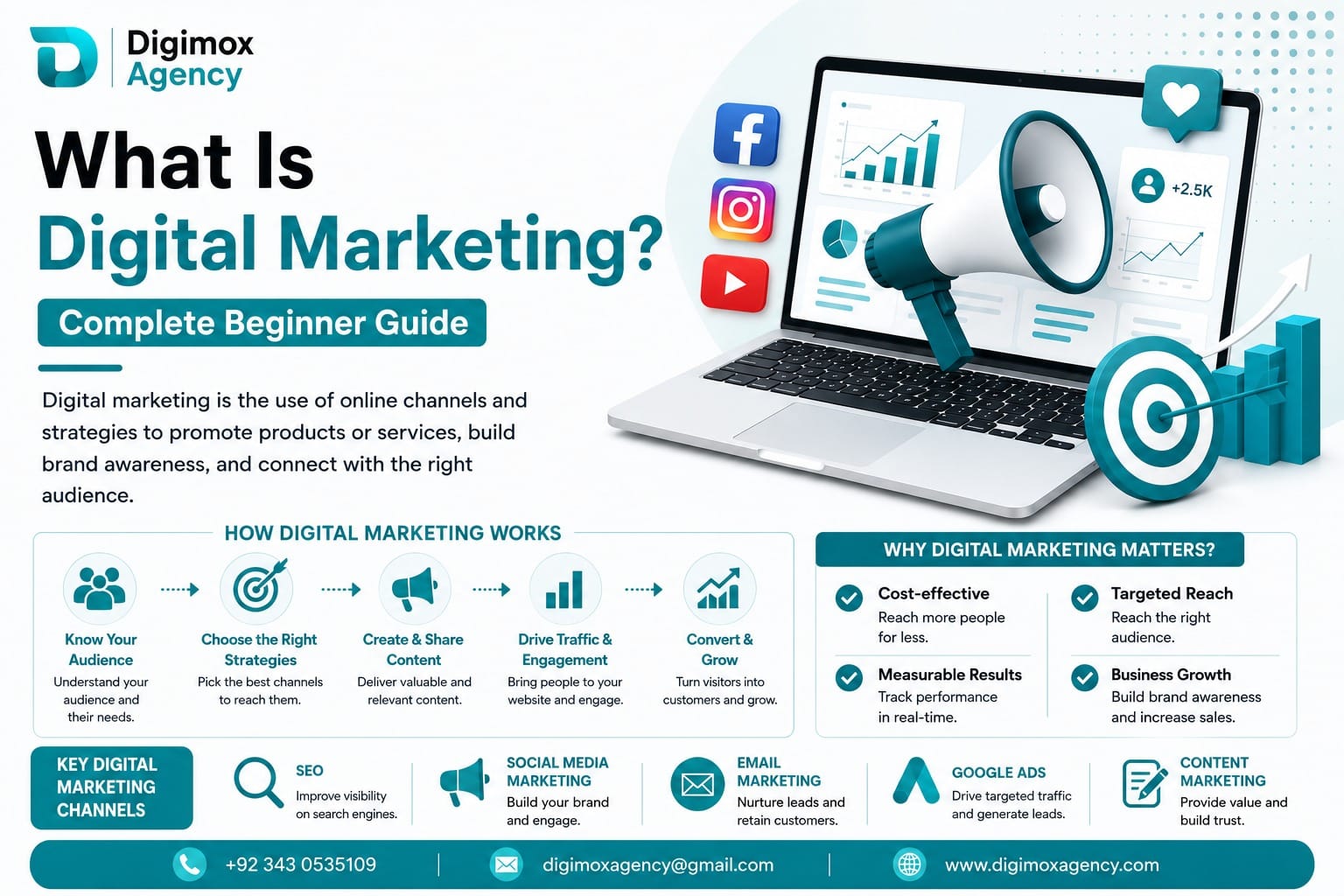
Digital marketing, sometimes called online marketing or internet marketing, refers to any marketing effort that uses electronic devices and the internet. Businesses use websites, search engines, social media, email, and mobile apps to connect with current and potential customers. At its core, digital marketing is about meeting people where they already spend time online.
Digital marketing is the modern way businesses promote their products and services online. Unlike traditional marketing, which depends on television commercials, newspapers, magazines, radio, and billboards, digital marketing reaches people through online platforms and digital advertising channels such as Google Ads, Facebook Ads, social media, search engines, websites, and email. This approach allows businesses to connect with their target audience more effectively, measure campaign performance in real time, and adjust their marketing strategies for better results. and email campaigns. The goal remains the same build brand awareness, generate leads, and drive sales but the tools and measurement methods are far more precise.
Search intent around “what is digital marketing and how does it work usually comes from beginners who want a practical, no-jargon explanation. So let’s break it down further.
How Digital Marketing Works
Understanding how digital marketing works starts with recognizing that it’s not a single activity it’s an ecosystem of interconnected channels working together. Here’s a simplified digital marketing process:
- Audience Research Businesses identify their target audience using tools like Google Analytics and buyer persona development.
- Strategy Creation Marketers design a digital marketing strategy that includes SEO, content marketing, social media marketing, and paid advertising.
- Content Creation Blogs, videos, infographics, and social posts are created to attract and engage the audience.
- Distribution Content is shared across digital marketing channels such as search engines, social media platforms, and email.
- Optimization Using data from Google Search Console and analytics tools, marketers refine campaigns for better performance.
- Conversion & Retention The final step focuses on turning visitors into customers through conversion rate optimization and nurturing them through the sales funnel.
This cycle repeats continuously, which is why digital marketing is considered a dynamic, ever-evolving discipline rather than a one-time task.
Types of Digital Marketing
There are several types of digital marketing, each serving a unique purpose within an overall strategy. Let’s explore the most important ones.
1. Search Engine Optimization (SEO)
SEO is the process of improving a website’s visibility on search engines like Google. It includes:
- On-Page SEO Optimizing content, titles, and meta descriptions.
- Off-Page SEO Building backlinks and improving domain authority through link building.
- Technical SEO Improving website speed, mobile-friendliness, and site structure.
- Local SEO Helping businesses rank for location-based searches.
SEO is often the foundation of long-term organic traffic growth.
2. Search Engine Marketing (SEM)
SEM involves paid strategies like Pay-Per-Click (PPC) advertising through platforms such as Google Ads. It helps businesses appear at the top of search engine rankings instantly, unlike SEO, which takes time.
3. Content Marketing
Content marketing focuses on creating valuable, relevant content blogs, videos, guides to attract and retain a clearly defined audience. It supports SEO, builds trust, and nurtures the customer journey.
4. Social Media Marketing (SMM)
Platforms like Facebook, Instagram, LinkedIn, and YouTube allow brands to engage directly with audiences. Instagram marketing and YouTube marketing, for example, are highly effective for visual storytelling and brand awareness.
5. Email Marketing
Despite being one of the oldest digital marketing techniques, email marketing remains highly effective for lead generation, customer retention, and personalized communication.
6. Affiliate Marketing
Businesses partner with affiliates who promote products in exchange for a commission on sales generated through their referral links.
7. Influencer Marketing
Brands collaborate with influencers who have established credibility and audiences, helping expand reach and trust.
8. Mobile Marketing
With most users browsing on smartphones, mobile marketing including SMS campaigns and app-based promotions has become essential.
9. Video Marketing
Video content, especially on YouTube and social platforms, drives higher engagement and is a growing pillar of digital advertising.
Digital Marketing vs Traditional Marketing
One of the most searched comparisons is digital marketing vs traditional marketing. Here’s a clear breakdown:
| Factor | Digital Marketing | Traditional Marketing |
| Cost | Generally lower, flexible budgets | Often expensive (TV, print, billboards) |
| Reach | Global, targeted audience | Limited to local or regional reach |
| Measurability | Real-time analytics and conversion tracking | Difficult to measure ROI accurately |
| Targeting | Precise audience targeting by demographics, interests, behavior | Broad, less specific targeting |
| Speed of Results | Fast (PPC, social ads) | Slower campaign rollout |
| Interaction | Two-way engagement (comments, messages) | One-way communication |
| Flexibility | Campaigns can be adjusted instantly | Once printed or aired, hard to change |
| Examples | SEO, PPC, email marketing, social media | TV ads, radio, newspapers, flyers |
This comparison table highlights why more businesses are shifting budgets toward digital marketing it offers better ROI (Return on Investment), stronger data-driven marketing insights, and more control over campaign performance.
Benefits of Digital Marketing
The benefits of digital marketing extend far beyond cost savings. Here are the most impactful advantages:
- Wider Audience Reach Connect with customers globally, not just locally.
- Cost-Effective Small budgets can still generate meaningful results through targeted digital advertising.
- Measurable Results Every click, impression, and conversion can be tracked using Google Analytics.
- Better Targeting Reach specific audience segments based on behavior, location, and interests.
- Higher Engagement Two-way communication through social media and email builds stronger relationships.
- Improved Conversion Rates Conversion rate optimization techniques help turn visitors into paying customers.
- Flexibility Campaigns can be paused, adjusted, or scaled instantly based on performance data.
- Brand Awareness Consistent digital branding builds recognition and trust over time.
For businesses of all sizes, these benefits of digital marketing translate into sustainable online business growth.
Digital Marketing Strategies That Work
Building effective digital marketing strategies requires more than just picking a channel. Here’s a step-by-step framework beginners can follow:
Step 1: Define Clear Goals
Are you aiming for brand awareness, lead generation, or direct sales? Your goals shape your entire marketing campaign.
Step 2: Know Your Buyer Persona
Understanding your ideal customer’s pain points, preferences, and online behavior is essential for effective audience targeting.
Step 3: Choose the Right Channels
Not every business needs every channel. A B2B marketing company might focus on LinkedIn marketing and email marketing, while a B2C marketing brand might prioritize Instagram and influencer marketing.
Step 4: Create a Content Calendar
Consistency matters. Plan blog posts, videos, and social content in advance to maintain a steady content marketing rhythm.
Step 5: Invest in SEO and Website Optimization
A well-optimized website improves user experience (UX) and helps convert visitors into leads.
Step 6: Use Paid Advertising Strategically
Platforms like Google Ads and Facebook Ads allow precise budget control and fast results, complementing organic efforts.
Step 7: Monitor, Analyze, and Optimize
Use Google Search Console and analytics dashboards to track performance and refine your marketing funnel continuously.
Digital Marketing Channels Explained
Understanding digital marketing channels helps beginners choose where to focus their energy first:
- Search Engines Organic (SEO) and paid (SEM) visibility.
- Social Media Facebook, Instagram, LinkedIn, YouTube for engagement and brand building.
- Email Direct, personalized communication with subscribers.
- Websites and Blogs The central hub for content marketing and lead capture.
- Affiliate and Influencer Networks Third-party promotion for expanded reach.
- Mobile Apps and SMS Direct engagement with on-the-go users.
Each channel plays a role in an omnichannel marketing approach, where consistent messaging appears across multiple touchpoints in the customer journey.
Digital Marketing Examples
Seeing digital marketing examples in action makes the concept easier to grasp:
- A local bakery running Facebook Ads to promote a weekend discount.
- An e-commerce marketing brand using retargeting ads for shoppers who abandoned their cart.
- A software company publishing blog content targeting long-tail keywords to attract organic traffic.
- A fitness influencer promoting a supplement brand through Instagram marketing.
- A B2B company using LinkedIn marketing and email marketing to generate qualified leads.
These digital marketing examples show how businesses across industries apply the same core principles differently based on their audience and goals.
Digital Marketing for Small Businesses
Digital marketing for small businesses levels the playing field against larger competitors. With limited budgets, small businesses can still achieve strong results by:
- Focusing on local SEO to appear in “near me” searches.
- Using social media marketing to build a loyal community without heavy ad spend.
- Leveraging email marketing for repeat customers.
- Creating helpful blog content that answers common customer questions.
- Using free tools like Google Analytics and Google Search Console to track performance.
Because digital marketing offers scalable, budget-friendly options, it has become the go-to growth channel for startups and small enterprises alike.
Digital Marketing Skills You Need
If you’re considering a digital marketing career, certain digital marketing skills are essential:
- SEO and Keyword Research Understanding how search engines rank content.
- Content Writing Creating engaging, optimized content for different platforms.
- Data Analysis Interpreting analytics to make informed decisions.
- Paid Advertising Management Running effective PPC campaigns.
- Social Media Strategy Building engagement across platforms.
- Basic Design and Video Editing Creating visual content for campaigns.
- Marketing Automation Tools Streamlining repetitive tasks like email sequences.
These digital marketing skills apply across industries, making digital marketing one of the most versatile career paths today.
Digital Marketing Career and Course Options
A digital marketing career offers diverse roles, including SEO specialist, content strategist, PPC manager, social media manager, and digital marketing analyst. Many professionals start with a digital marketing course covering fundamentals like SEO, SEM, content marketing, and analytics before specializing further.
For those wondering how to learn digital marketing, the best approach combines structured courses with hands-on practice running a personal blog, managing a small social media account, or volunteering to help a local business with its online presence.
Importance of Digital Marketing Today
The importance of continues to grow as consumer behavior shifts increasingly online. With more purchasing decisions influenced by online research, social proof, and search engine rankings, businesses that ignore risk losing visibility to competitors who have embraced it. This is precisely why digital marketing has become a non-negotiable part of modern business strategy, regardless of industry or company size.
Conclusion
So, what is digital marketing, really? It’s the modern, data-driven approach to connecting businesses with the people who need their products or services through search engines, social media, email, and beyond. From SEO and content marketing to PPC and social media marketing, digital marketing combines multiple channels into one cohesive strategy that delivers measurable, scalable results. Whether you’re a small business owner looking to grow online or someone exploring a digital marketing career, understanding these fundamentals is the first step toward long-term success in today’s digital-first economy.
Call to Action
Ready to put this beginner’s guide to digital marketing into action? Start by auditing your current online presence, choosing one or two channels to focus on, and tracking your results with free tools like Google Analytics. If you found this guide helpful, share it with someone just starting their digital marketing journey and subscribe for more practical, no-fluff marketing insights.